
Get Personalized OCD Treatment Online with SDKare
Intrusive thoughts, repeated checking, mental rituals, or a constant need for reassurance can take over more of your day than you want them to. Get online OCD treatment from licensed SDKare providers who can help you understand your symptoms and find an appropriate path forward.

Licensed Providers
HIPAA-Compliant Visits
Same-Day Appointments
Personalized OCD Care
2.3%
U.S. adults experience OCD at some point in their lives.
Evidence-based treatment can reduce symptom severity and help people regain more control over everyday life.
What Is OCD?
OCD, or obsessive-compulsive disorder, is a mental health condition that can make unwanted thoughts feel hard to control and create a strong urge to repeat certain behaviors or mental rituals.
These thoughts are called obsessions, and the repeated actions or rituals are called compulsions. They may bring temporary relief, but the cycle often returns and can begin to interfere with work, relationships, routines, and daily life.
OCD can look different from person to person, and effective treatment can help make symptoms more manageable.
Signs and Symptoms of OCD
OCD can look different from person to person. Some symptoms are visible, while others happen entirely in the mind.
Obsessions may include
- Fear of contamination
- Persistent doubts
- Fear of harming yourself or someone else
- Unwanted sexual, religious, or aggressive thoughts
- Fear of making a mistake
- A need for things to feel exact or “just right”
Compulsions may include
- Repeated washing or cleaning
- Excessive checking
- Counting or repeating actions
- Arranging or ordering objects
- Repeated reassurance seeking
- Mentally repeating words, phrases, or prayers
- Avoiding situations that trigger distress
Having an intrusive thought or repeated habit does not automatically mean you have OCD. What matters is the pattern, distress, time involved, and impact on your daily functioning.
When Should You Seek Help for OCD?
Consider speaking with a mental health professional when obsessions or compulsions:
- Take up significant time
- Feel difficult to control
- Cause ongoing distress
- Interfere with work, school, or relationships
- Lead you to avoid everyday situations
- Make normal routines harder to complete
- Keep returning despite attempts to stop them
You do not need to wait until OCD becomes severe before seeking professional support.

How Is OCD Evaluated Online?
An OCD evaluation looks at more than whether you have repetitive thoughts or behaviors. Your provider may ask about:
- The intrusive thoughts, urges, or images you experience
- Behaviors or mental rituals you feel driven to repeat
- Situations or triggers you avoid
- How much time symptoms take each day
- How much distress they cause
- How they affect your daily life
- Previous mental health treatment
- Other symptoms that may overlap with OCD
A careful evaluation also helps distinguish OCD from anxiety disorders, depression, trauma-related conditions, tic disorders, and other mental health concerns.
What to Expect During an Online OCD Visit
Talking about intrusive thoughts can feel uncomfortable, especially when they seem disturbing, irrational, or embarrassing.
Your provider may ask about:
- What thoughts keep returning
- What you do to reduce the distress they cause
- Mental rituals or reassurance seeking
- Situations you avoid
- How symptoms affect your routine
- Anxiety, mood, and other mental health symptoms
- Previous treatment
- Your goals for care
The purpose of the visit
To understand the pattern behind your symptoms, not to judge the content of your thoughts.
Evidence-Based Approaches to OCD Treatment
OCD treatment should target the cycle between intrusive thoughts, distress, compulsions, and avoidance.
01
Exposure and Response Prevention
Exposure and response prevention, or ERP, is the first-line psychological treatment for OCD.
ERP gradually helps you face thoughts, situations, or triggers connected to your obsessions while learning not to perform the usual compulsion or ritual.
Over time, this can reduce the power that obsessions and compulsions have over your daily life.
02
Cognitive Behavioral Therapy
CBT helps identify patterns of thinking and behavior that maintain OCD symptoms.
For OCD, CBT is often adapted to include ERP, making treatment more specific to obsessive thoughts, compulsions, avoidance, and reassurance seeking.
03
Acceptance and Commitment Therapy
ACT helps people respond differently to unwanted thoughts instead of repeatedly trying to suppress, control, or eliminate them. For OCD, ACT is commonly used alongside ERP to improve willingness to experience discomfort while continuing to engage in meaningful activities.
04
Mindfulness-Based Behavioral Approaches
Mindfulness-based strategies can help you notice intrusive thoughts without automatically reacting to them. These approaches may support ERP by helping reduce rumination and increasing awareness of thoughts, feelings, and urges without immediately engaging in compulsions.
05
Medication Support When Appropriate
Medication may also be considered as part of OCD treatment when clinically appropriate.
Your provider can review your symptoms, previous treatment, health history, current medications, and treatment goals before determining whether medication support may be useful.
How SDKare Personalizes Online OCD Treatment
OCD does not look the same in everyone. Some people experience visible compulsions such as checking or washing. Others struggle mainly with mental rituals, intrusive thoughts, avoidance, or reassurance seeking.
Your SDKare provider considers the pattern and impact of your symptoms before recommending care. Your treatment plan may include:
- ERP or CBT-based treatment recommendations
- ACT or mindfulness-based strategies when appropriate
- Medication support when clinically appropriate
- Care for related mental health concerns
- Follow-up visits to review progress
The goal is not simply
To reduce anxiety in the moment, but to help you change the patterns that keep OCD going.
Experienced Providers for OCD Care
SDKare connects you with licensed providers experienced in mental health care who understand how obsessions, compulsions, avoidance, and reassurance seeking can affect everyday life.
Your provider can help clarify what you are experiencing, explain your treatment options, and guide you toward appropriate OCD care without judgment.

Why Choose SDKare for Online OCD Care?
HIPAA-compliant online visits
Licensed mental health providers
Same-day appointments
Personalized OCD treatment
Secure video visits
Evidence-based treatment approaches
Medication support when clinically appropriate
Ongoing follow-up care
Convenient care from home
Self-pay appointments without insurance required
Online OCD Treatment, Step by Step
01
Tell Us What OCD Looks Like for You
Book an online appointment and discuss intrusive thoughts, compulsions, mental rituals, reassurance seeking, or avoidance affecting your daily life.
02
Understand the Pattern
Your provider looks at the relationship between your obsessions, distress, compulsions, triggers, and daily functioning.
03
Build a Treatment Plan That Targets the Cycle
Get recommendations based on your evaluation, which may include ERP, CBT, supportive behavioral approaches, medication management when appropriate, and follow-up care.

When Online OCD Care May Not Be Enough
Online OCD treatment can be appropriate for many adults, but some situations may require more intensive or specialized care.
Your provider may recommend another level of treatment when:
- OCD symptoms are severe or rapidly worsening
- Symptoms take up much of the day
- Safety concerns are present
- Standard outpatient treatment has not been effective
- A more intensive ERP program is needed
- Another condition requires in-person assessment
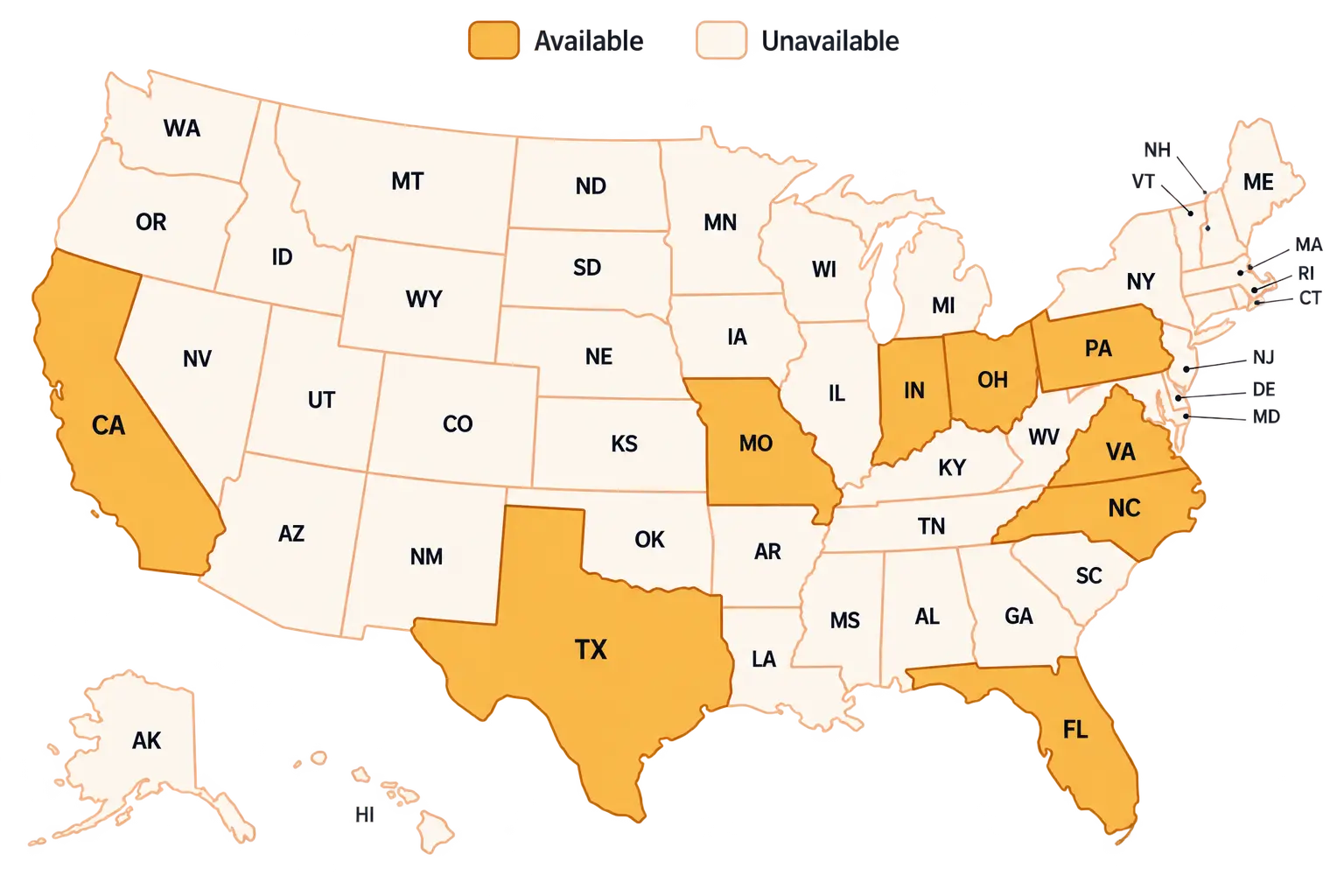
Online OCD Treatment in Your State
SDKare offers online OCD care for eligible adults in:
Transparent Pricing for Online OCD Care
Your First Appointment
Initial Visit
$159 / Visit
- Discuss OCD symptoms and concerns
- Review relevant mental health history
- Receive a clinical evaluation
- Explore personalized treatment options
Continuing Your Care
Follow-Up Visit
$119 / Visit
- Review symptoms and progress
- Discuss treatment response
- Address ongoing concerns
- Adjust your care plan when appropriate
Online OCD Treatment FAQs
Yes. Many people can receive OCD evaluation and treatment through telehealth. Online care may include ERP or CBT-based treatment, supportive behavioral approaches, medication management when appropriate, and ongoing follow-up.
Yes. A licensed provider can evaluate OCD symptoms through telehealth by reviewing obsessions, compulsions, mental rituals, avoidance, distress, functional impact, and relevant mental health history.
Exposure and response prevention, or ERP, is considered the first-line psychological treatment for OCD. ERP is a specialized form of CBT that helps people gradually face OCD triggers while reducing compulsive responses.
An obsession is an unwanted, recurring thought, urge, or image that causes distress. A compulsion is a repeated behavior or mental act performed in response to that distress or according to rigid rules.
Intrusive thoughts can occur in OCD, but having an unwanted thought does not automatically mean you have the disorder. OCD involves recurring patterns of obsessions, compulsions, or both that cause distress or interfere with daily functioning.
ERP is a form of CBT in which a person gradually faces feared thoughts, situations, or triggers while practicing not performing the usual compulsion. Over time, this helps weaken the OCD cycle.
Yes. Some people receive psychotherapy such as ERP without medication. Others may benefit from medication or combined treatment. The appropriate approach depends on symptom severity, treatment history, preferences, and clinical needs.
A licensed provider may consider medication as part of OCD treatment when clinically appropriate and permitted under applicable prescribing requirements. Treatment decisions depend on your individual evaluation and medical needs.
Yes. SDKare offers same-day online OCD appointments with licensed providers. Available times may vary by state and provider availability.
Yes. SDKare offers self-pay online OCD appointments, so insurance is not required to schedule care.